
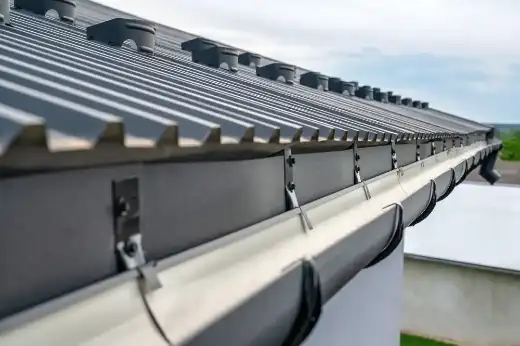
If you’ve seen a thick ridge of ice along the edge of your roof and a row of icicles hanging from the gutters, you’ve seen an ice dam. They’re common across Pennsylvania and South Jersey because our winters swing above and below freezing, sometimes in the same day. Ice dams look harmless, but they’re one of the most common causes of winter leaks we repair.
What causes an ice dam
An ice dam starts in your attic, not on your roof. Warm air from the house leaks up into the attic and heats the roof boards. Snow on the upper part of the roof melts, and the water runs down until it reaches the roof edge, which hangs out past the warm walls and stays cold. There it freezes again.
Each time this repeats, the ice ridge gets taller. Eventually it holds back a pool of water behind it. Shingles shed water running down the roof, but they aren’t built to hold standing water, so it backs up under the shingles and into the house.
Ice dams need three things at once:
- Snow on the roof
- A warm upper roof, usually from heat escaping into the attic
- A cold roof edge where the water refreezes
Signs you have an ice dam problem
- A ridge of ice along the roof edge or in the gutters
- Large icicles, especially with water dripping behind them
- Water stains or peeling paint on ceilings near outside walls
- Damp insulation or frost on the roof boards in the attic
- Gutters pulling away from the house after a cold snap
The damage ice dams cause
The leak is only the start. Water that gets past the shingles soaks the roof boards and the attic insulation. Wet insulation stops working, which lets even more heat escape and makes the next ice dam worse. Over time the water can rot the boards, stain ceilings and walls, and lead to mold. The weight of the ice can also bend or tear gutters off the fascia.
How to prevent ice dams
The real fix is to keep the whole roof cold, so snow melts evenly instead of refreezing at the edge.
- Seal air leaks into the attic. Gaps around light fixtures, the attic hatch, plumbing pipes and chimneys let warm air in. Sealing them is usually the most effective step.
- Add insulation. A well-insulated attic floor keeps the heat in your living space, where it belongs.
- Ventilate the attic. Soffit vents along the eaves let cold air in, and a ridge vent at the top lets it out. That steady flow keeps the roof boards close to the outside temperature.
- Install ice and water shield. This self-sealing membrane goes under the shingles along the roof edge and in the valleys. If an ice dam does form, it stops the water from getting into the house. We install it on every new roof.
- Keep gutters clean. Clogged gutters give ice a head start. Clean them in late fall after the leaves drop.
What to do if you have an ice dam right now
- Use a roof rake from the ground to pull snow off the lower few feet of the roof after a storm.
- Don’t climb onto an icy roof, and don’t chip at the ice with a hammer or shovel. You can easily break the shingles.
- Don’t use rock salt. It can damage shingles, gutters and the plants below.
- If water is already coming inside, catch it, take photos and call a roofer. A small leak today can turn into wet insulation and stained ceilings by spring.
When to call a roofer
If you get ice dams every winter, the roof is telling you something about the attic. We can check your ventilation, look for signs of water damage and repair any shingles or flashing the ice has lifted. If your roof is due for replacement anyway, the new roof is the best time to add ice and water shield and fix the ventilation for good. Learn more about our roof repair and roof replacement services.
More Articles
Ready to Protect Your Home?
Get your free, no-pressure estimate. Our local team will look at your roof and exterior and give you clear, upfront pricing.
(888) 494-1248Licensed & insured · 25+ years of experience · PA HIC #PA209178 · NJ HIC #13VH14032800
Last updated · EcoGreen Roofing And Exteriors · PA HIC #PA209178 · NJ HIC #13VH14032800